
What to Expect From a Commercial Electrical Compliance Audit in Wollongong
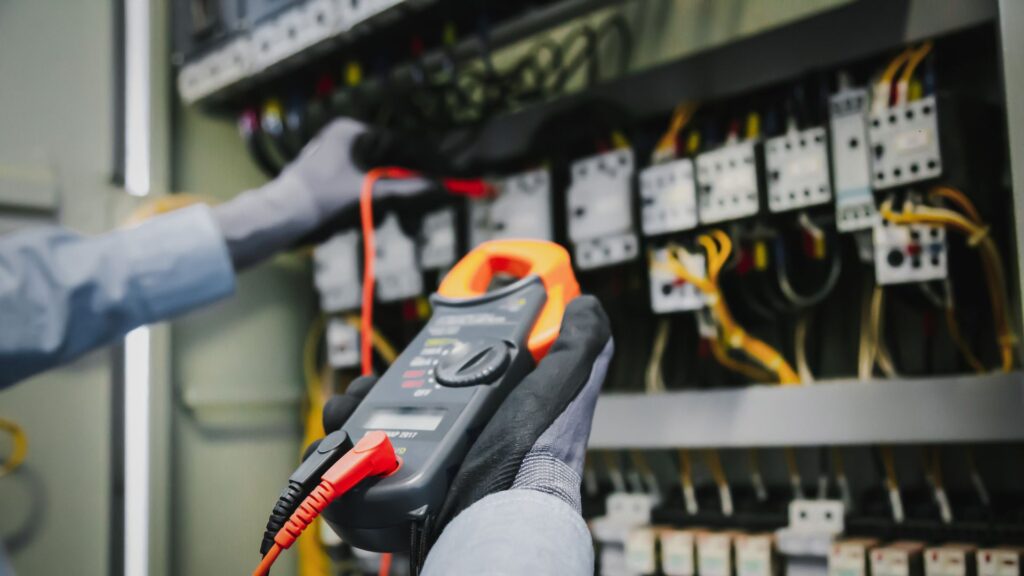
A commercial electrical compliance audit in Wollongong involves a licensed electrician inspecting and testing your switchboards, safety switches, wiring, emergency lighting, and plug-in equipment. You then get a report showing what passed, what failed and what to fix first.
Much of the inspection can be done with the power on; however, some tests require your electrician to temporarily turn the power off, which they should communicate when necessary.
What Is a Commercial Electrical Compliance Audit?
A commercial electrical compliance audit is a structured check of your site’s electrical installation and equipment against your WHS duties and Australian Standards. It covers the fixed installation (boards, wiring, power points, earthing) and the devices that depend on it, like RCDs/RCBOs and emergency lighting. The result is a written record of what was tested, what was found and what needs attention.
Is An Electrical Audit A Legal Requirement?
No NSW law specifically requires a compliance audit.
The law requires a person conducting a business or undertaking (PCBU) to manage electrical risks in the workplace. The Work Health and Safety Regulation 2025 (NSW) also sets out specific testing duties. Two are relevant to an audit:
- A competent person must regularly inspect and test electrical equipment supplied through a socket outlet and used in a hostile environment. A hostile environment is one where equipment is likely to be damaged, for example by moisture, heat, dust or frequent moving.
- RCBOs/RCDs (safety switches) must be tested regularly.
Emergency lighting is also part of the fire safety records many buildings keep for their Annual Fire Safety Statement (AFSS).
An audit is one way to show you’ve met these duties. It isn’t a legal document in itself, but it’s useful evidence if an insurer, landlord or SafeWork NSW asks. For the exact wording, see the Work Health and Safety Regulation 2025 on the NSW Legislation website and SafeWork NSW's electrical work guidance.
Audit Vs Test And Tag Vs Thermal Scan
| Test and tag | Thermal scan | Compliance audit | |
| Covers | Plug-in equipment and leads | Heat in boards and connections | The whole installation and equipment |
| Finds | Damaged or unsafe portable items | Hot spots from loose or overloaded connections | Faults, gaps and missing records across the site |
| Reference | AS/NZS 3760:2022 | A diagnostic method, not a standard | AS/NZS 3000:2018 for wiring, plus the standards for each item |
| Where it fits | Often included in an audit | Sometimes included, sometimes an add-on | The overall check |
Why Businesses Book an Audit
Most audits start with an event. The usual ones are:
- A new lease or the end of a lease
- Buying a building or business
- A request from your insurer
- A SafeWork NSW visit or enquiry
- A fit-out or major change to the site
- An electrical incident
Or there are no records from the last electrical contractor, and the business needs them to ensure compliance.
How to Prepare for Your Audit
Have these ready before the electrician arrives:
- Clear access to switchboards, distribution boards and plant rooms, including keys and security codes
- Previous test reports and your test and tag register
- Certificates of Compliance for Electrical Work (CCEWs) from recent jobs
- Your emergency lighting logbook
- A list of equipment that can’t lose power (servers, fridges, cool rooms, medical equipment)
- A site contact on the day
Some testing means turning power off, so let staff and tenants know in advance. If parts of your site can’t lose power during trading hours, tell us when you request a quote so we can plan around it.
What Happens on Audit Day
Walk-Through And Scope Check
The electrician meets your site contact and confirms which boards, areas and equipment are in scope. Tell them about anything that can’t be switched off; this is a good time to agree on the power-off windows.
Switchboards and Distribution Boards
The electrician checks each board for:
- Circuit labels and up-to-date charts
- Signs of heat or damage
- Missing covers
- Exposed live parts
Safety Switch (RCD) Testing
Pressing the test button only shows that the mechanism moves. It doesn’t measure how fast the device trips. A proper test uses an instrument that measures trip time, and that result shows whether the RCD trips within the required time. The test briefly cuts power to the circuits the RCD covers, so plan the timing around your critical equipment.
Fixed Wiring And Power Points
The electrician tests insulation resistance, earth continuity and polarity. Some of these tests require the circuit to be isolated, so the short power-offs happen here. Ask how the work will be staged so your whole site isn’t off at once.
Emergency And Exit Lighting
Discharge-test emergency and exit lights to confirm the batteries last for their rated duration (AS/NZS 2293). Record the results in your logbook to support your fire safety records, including the AFSS where it applies.
Plug-In Equipment
Portable items are tested and tagged to AS/NZS 3760:2022. Damaged leads and double adaptors are common findings. The regulation requires a test record showing who did the testing, the date, the outcome and the next test date. A tag can serve as that record.
Load And Thermal Checks
Power logging shows whether a board is overloaded. Thermal imaging picks up hot spots you can’t see, such as a loose connection running hot.
How Long Does an Audit Take?
It depends on the site. A single office and a multi-board warehouse are very different jobs, so we don’t give a standard time. These factors add time:
| Factor | Why it adds time |
| Number of boards and circuits | More to inspect, isolate and test |
| Number of plug-in items | Each one is inspected, tested and recorded |
| Site access | Locked rooms, plant areas and tenant coordination |
| Missing charts or labels | Circuits take longer to trace |
If you contact us and share details about your site, we can give you a realistic time expectation.
What Your Audit Report Should Include
A pass/fail sheet with no detail isn’t a useful report. Use this table to check any provider’s report.
| Report section | What it tells you |
| Site details and date | What was audited and when |
| Tester name | Who is responsible for the results |
| Each asset tested | Nothing was skipped |
| Result for each asset | Pass, fail or needs attention |
| Photos of defects | Proof and a clear record |
| Location of defects | Where your team or another contractor can find them |
| Risk rating | What to fix first |
| Recommended fix | The next step |
| Next test date | When to retest |
Risk ratings should be in plain terms:
- Fix now: a safety risk that needs attention straight away.
- Fix soon: not urgent, but don’t leave it.
- Plan for it: budget for it at your next maintenance cycle.
Common Findings in Illawarra Commercial Buildings
Typical findings on commercial sites include:
- Circuit charts that are missing or wrong, usually after years of changes with no updates
- RCDs/RCBOs that trip too slowly, or not at all
- Emergency lights with flat batteries
- Boards in older buildings carrying more load than they were built for
- Outdoor boards near the coast with salt corrosion on enclosures, seals and connections
- Damaged leads on industrial sites and in workshops and warehouses around Unanderra and Port Kembla
Repairs and Records After the Audit
The audit report gives your electrician a clear order of work. Fix high-risk items first, then work through the rest by risk. Once the repairs are done, focus on records. Set your retest dates and keep everything in one register: audit reports, test records, CCEWs (lodged through eCert as of 1 July 2026) and the emergency lighting logbook. Insurers and landlords often ask for these. And if the audit shows your switchboard is at its limit, an upgrade is usually a better fix than patching it again.
How Often Should You Book an Audit?
There’s no single interval for every site. It depends on the building type, how heavily it’s used, the environment, and the installation’s age. Some items have their own schedules under the standards, including RCDs, emergency lighting and plug-in equipment in hostile environments, so keep a list of your equipment and check each item’s requirements.
Book sooner after a fit-out, an incident, a change of use or a change of tenant.
Choosing an Electrician for Your Audit
- Pick a licensed commercial electrician who can also fix what they find, so you don’t have to chase a second contractor.
- Ask for a sample report before you book.
- Ask for a written quote that lists exactly what’s included.
Need an electrical audit for your Wollongong business? Our team can help with electrical audits and compliance testing. Get a free quote, or call 02 4256 5899 and we’ll talk through your equipment and set the right scope.
FAQs
Is a commercial electrical audit mandatory in NSW?
No NSW law specifically requires one. The WHS Regulation 2025 does require businesses to manage electrical risks, including testing RCDs and some plug-in equipment, and an audit is one way to show you’re doing that.
Will my business lose power during an electrical audit?
Not for the whole audit. Much of the inspection can be done with the power on, but some tests, like insulation resistance, require briefly isolating a circuit. Those windows should be agreed with you beforehand.
What’s the difference between an electrical audit and test and tag?
Test and tag focuses on plug-in equipment and leads. An audit covers the whole installation, including boards, wiring, RCDs and emergency lighting, and usually includes plug-in testing.
What happens if my site fails an electrical audit?
You get a defect list with risk ratings. You fix urgent items first, then schedule the rest. A failed result isn’t a penalty in itself, but you’ll need to act on what the audit finds.
Who can carry out an electrical compliance audit in NSW?
The WHS Regulation requires a competent person to carry out the testing it covers. Any repair to fixed wiring must be done by a licensed electrician, so choose one who can do both.
Can the electrician fix the problems they find on the same visit?
Minor items, sometimes. Larger repairs usually need a quote and scheduling. Ask your provider how they handle the CCEW for any repair work.