
You're getting your Wollongong home ready to sell, and the agent mentions something about smoke alarms needing to be interconnected. You glance up at the lone alarm in the hallway and think, "That's been there for years. Isn't that enough?"
Maybe. Maybe not. It depends on when your home was built.
So why are interconnected smoke alarms required? Simply because a standalone kitchen alarm won't always wake someone sleeping two floors up.
When alarms are interconnected, one detecting smoke triggers them all. Everyone in the house hears the warning, no matter where the fire starts or where they're sleeping. That's why the Building Code of Australia made them mandatory for new homes built after May 2014.
But NSW smoke alarm requirements are more layered than most homeowners realise. The rules are different for new builds, older homes, and rental properties. And Fire and Rescue NSW is clear that the minimum legal requirement isn't the same as best practice.
Below, we break down what the law actually says, who needs interconnected smoke alarms, and what it takes to get your home compliant. We install smoke alarm systems across Wollongong and the Illawarra Region every week, so we'll give you the practical side of things too.
What Are Interconnected Smoke Alarms?
A standalone smoke alarm only sounds in the room where it's installed. If a fire starts in your kitchen while you're asleep upstairs, that single alarm might not wake you. This is especially dangerous for children, the elderly, and anyone with mobility issues who need more time to evacuate.
Interconnected smoke alarms are linked so that when one alarm detects smoke, all alarms in the house go off at the same time. It doesn't matter whether the fire starts in the garage, the laundry room, or the spare bedroom, every person in every room hears the warning.
There are three ways alarms can be interconnected:
| System Type | How It Works | Best For | Notes |
| Hard wired | Connects through your home's electrical wiring. Runs off mains power with a backup battery. | New builds and major renovations | Most reliable option. Required by the Building Code of Australia for new builds. Must be installed by a licensed electrician. |
| Wireless (RF) | Alarms communicate via radio frequency signals. Each unit runs on a sealed 10-year lithium battery. | Existing homes where new wiring would be disruptive or expensive | Produces fewer false alarms than older ionisation units, so people are less likely to disconnect them. |
| Hybrid | Combines hard wired and wireless alarms in the same system. | Homes with extensions or converted garages | As long as all alarms communicate with each other, the system works. |
What Does NSW Law Actually Require?
The Minimum Legal Requirement (All NSW Homes)
Under the Environmental Planning and Assessment Act 1979, every residential building in New South Wales where people sleep must have at least one working smoke alarm installed on every level. This applies to owner-occupied homes, rental properties, relocatable homes, caravans, and moveable dwellings.
The smoke alarms must comply with Australian Standard AS 3786. A person who doesn't comply is guilty of an offence with a maximum penalty of $550.
That's the baseline, and it's been NSW law since 2006.
Homes Built After 1 May 2014 (Interconnection Required)
The Building Code of Australia (enforced in NSW through the Environmental Planning and Assessment Act) requires that any dwelling built after 1 May 2014 must have interconnected smoke alarms where more than one alarm is installed.
These alarms must be connected to mains power with a backup battery, interconnected so all alarms sound together, and compliant with Australian Standard AS 3786.
If your Wollongong home was built after May 2014 and your smoke alarms aren't interconnected, your property is non-compliant with the building code. This especially matters if you're selling, renting, or making an insurance claim.
Major Renovations and Extensions
If you've done a major renovation or extension that required a development application, the new section of your home needs compliant smoke alarms installed. Where more than one alarm is required in the new section, those alarms must be interconnected.
This part confuses many people. If your home was built before May 2014, the alarms in a new extension don't have to be connected to those in the older part of the house. But any extensions approved after that date need their alarms interconnected.
This is one area where getting professional advice saves headaches. The rules around what connects to what depend on your build dates and the scope of your renovation.
Rental Properties (Extra Obligations)
NSW legislation requires landlords to meet additional responsibilities under the Residential Tenancies Act 2010, strengthened in March 2020. Landlords and property managers must ensure smoke alarms are installed on every storey of the rental property and they are in working order, replace removable batteries at the commencement of each new tenancy, and conduct annual checks to ensure alarms are functioning. They must also replace smoke alarms within 2 business days of learning one isn't working, and replace alarms that are more than 10 years old.
Tenants can't tamper with or disable smoke alarms without a reasonable excuse, but they must notify the landlord if an alarm fails or isn't working.
For rental properties built after May 2014, the interconnection requirement applies, and property managers across Wollongong are increasingly checking for this during routine inspections.
What Fire and Rescue NSW Recommends
The legal minimum and best practice are two different things. Fire and Rescue NSW recommends that all homes, regardless of build date, install interconnected photoelectric smoke alarms in every bedroom, hallway, living space, stairway, and even the garage.
This recommendation isn't legally binding for existing homes built before 2014, but it's based on decades of fire investigation data, and there are good reasons to follow it.
Why Photoelectric Alarms? (And Why Ionisation Alarms No Longer Meet Requirements)
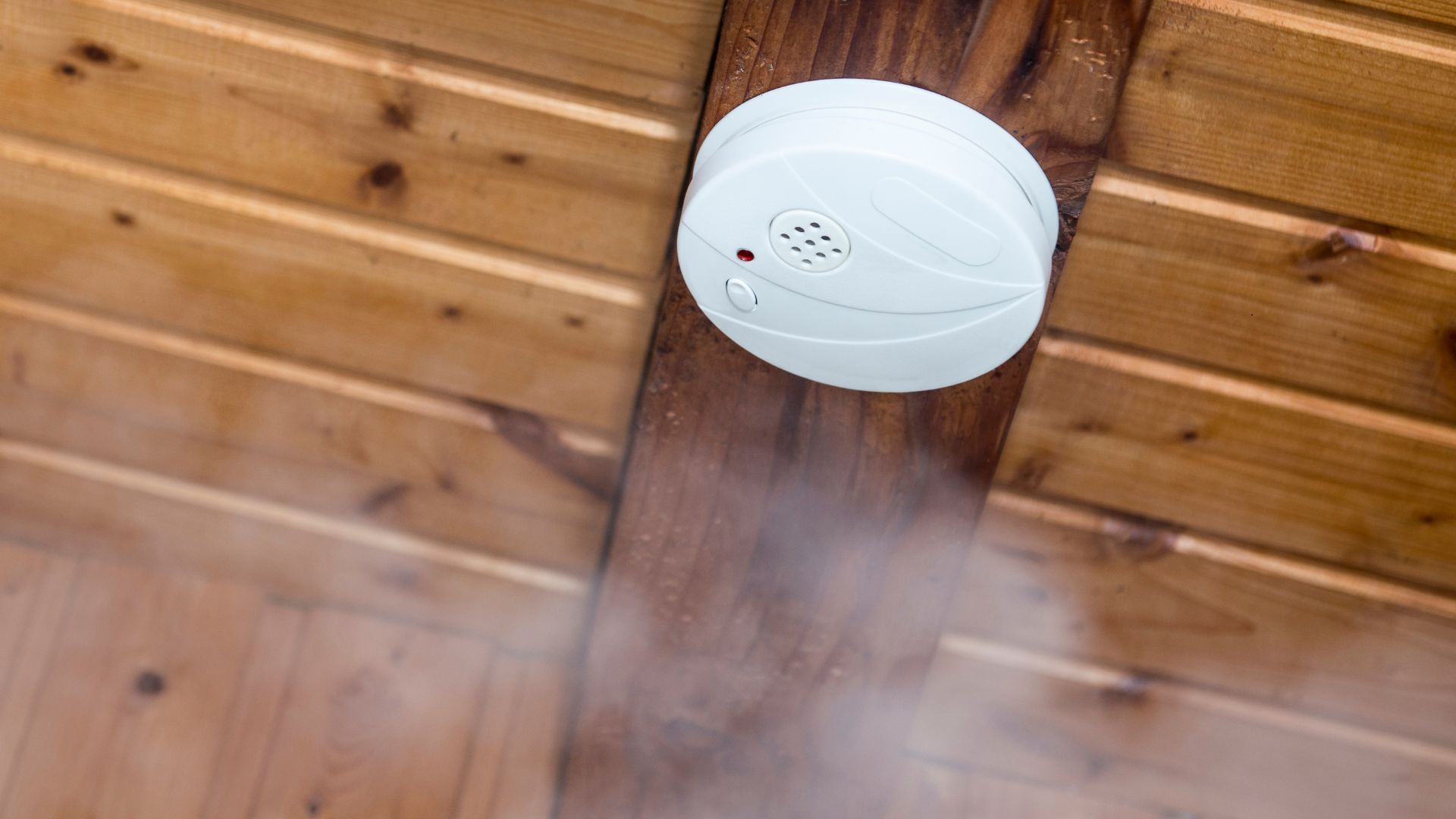
NSW requires photoelectric smoke alarms, as ionisation alarms no longer meet the Australian Standard requirements for residential properties in NSW.
A photoelectric alarm uses a light beam and a sensor inside a small chamber. When smoke particles enter the chamber, they scatter the light beam onto the sensor, triggering the alarm.
An ionisation alarm uses a small amount of radioactive material to detect changes in electrical current caused by smoke. The problem is that ionisation alarms respond poorly to smouldering fires, which are the most common type of residential fire. They're also prone to false alarms caused by cooking steam, leading people to disconnect them or remove the batteries. That defeats the entire purpose of having an alarm.
Photoelectric models detect smouldering fires faster and produce fewer false alarms. That's why they're the only type that meets the current Australian Standard for NSW homes.
When you're buying replacement alarms, check that the unit complies with AS 3786 and is photoelectric. It should be clearly stated on the packaging.
Why Were These Requirements Introduced?
The push toward interconnected smoke alarms came from research that kept showing the same thing.
Between 2016 and 2021, Fire and Rescue NSW recorded tens of thousands of structure fires resulting in 88 fatalities, 52 of which were classified as preventable. More than 2,300 people were injured.
Most fatal residential fires occur at night, when people are asleep. You can't smell smoke while you're asleep, so a working smoke alarm is the only thing that will wake you.
With interconnected smoke alarms, everyone gets alerted early, no matter where they are. According to fire safety research, the risk of dying in a house fire is roughly halved when working smoke alarms are present. Interconnected systems improve on that further by ensuring everyone in the home is alerted, regardless of where the fire starts. That's why the Building Code of Australia made them mandatory for new builds, and why Fire and Rescue NSW recommends them for every home.
Fire and Rescue NSW has also consistently found that a significant proportion of residential fires involve homes with no working smoke alarm.
Where Smoke Alarms Must Be Installed
| Homes Built After May 2014 | Homes Built Before May 2014 | |
| Bedrooms | Every bedroom and sleeping area | Not required (but recommended) |
| Hallways | Every hallway connecting sleeping areas to the rest of the home | Near bedrooms. If bedrooms are in different parts of the house, near each group. |
| Other storeys | Every storey, even levels without bedrooms | Every level must have at least one alarm |
| Interconnection | Required | Not required (but recommended) |
For a typical three-bedroom, two-storey Wollongong home built after 2014, that means at least five or six interconnected alarms.
Placement Tips
- Install on or near the ceiling, at least 300mm from any wall
- On sloped ceilings, position between 500mm and 1500mm from the highest point
- Avoid dead air spaces in corners where smoke doesn't circulate
- Keep away from kitchens and bathrooms where steam and cooking fumes cause false alarms
- Use a heat alarm near cooking areas instead
Types of Compliant Smoke Alarms for NSW
Not every alarm on the shelf at Bunnings meets NSW smoke alarm requirements. Here's what to look for.
| Alarm Type | How It Works | Best For |
| Hard-wired (mains-powered) | Connects to 240V power supply with a backup battery. Must be installed by a licensed electrician. | New builds and major renovations |
| Sealed 10-year lithium battery | Self-contained unit with a non-removable battery. Available in wireless interconnected models. | Upgrading existing homes without rewiring |
| Wireless RF interconnected | Uses radio frequency to link alarms. Some brands connect up to 24 units. | Older Wollongong homes where you want interconnected coverage without tearing into walls |
Every alarm must comply with Australian Standard AS 3786. Check for the certification mark on the unit. Smoke alarms must be replaced every 10 years from the date of manufacture, not the date of installation. Check the manufacturer's instructions and the date printed on the alarm itself.
Standard 9V battery alarms don't meet current NSW smoke alarm requirements. If that's what you've got, it's time to upgrade.
What Happens If You Don't Comply?
The direct penalty is a fine of up to $550 under NSW legislation, but the real consequences go further.
Non-compliant smoke alarms can delay property settlements, create liability issues for landlords under the Residential Tenancies Act, and raise questions with insurers when you make a claim. Some insurers may also review premiums or coverage conditions for properties that aren't up to code.
And beyond the paperwork, non-compliant alarms put people at risk. That matters more than any fine.
Why You Need a Licensed Electrician
In NSW, only a licensed electrician can install hard-wired smoke alarms. It's electrical work, and it must comply with AS/NZS 3000 (the Wiring Rules). After installation, you'll receive a Certificate of Compliance for the electrical work.
A licensed electrician will ensure your alarms are correctly installed and positioned, properly interconnected, and compliant with Australian Standard AS 3786.
How Easther Electrical Can Help
We install and upgrade interconnected smoke alarm systems across Wollongong and the wider Illawarra region.
We start by checking what you've got, then recommend the most practical way to get compliant based on your home's build date, layout, and wiring. We also work with real estate agents and property managers who need properties brought up to standard before settlement or new tenancy agreements. If you're on a tight deadline, we'll prioritise it.
Is Your Wollongong Home Protected?
Smoke alarm compliance isn't just a box to tick before settlement. It's about making sure the people in your home can get out safely if a fire starts.
If your home was built after 2014 and your alarms aren't interconnected, you're not compliant. If your home is older and you've only got a couple of standalone alarms from 2015, those are approaching their 10-year replacement date.
And if you're a landlord or about to sell, getting this sorted now avoids delays, penalties, and difficult conversations with agents or tenants down the track.
We do smoke alarm assessments and installations across Wollongong, from Thirroul to Shellharbour and everywhere in between. Get a free quote or call 02 4256 5899.
Frequently Asked Questions
Do I need interconnected smoke alarms if my home was built before 2014?
Not legally, as long as you have at least one working alarm on every level. But Fire and Rescue NSW strongly recommends interconnected photoelectric alarms for all homes, regardless of build date.
Can I install interconnected smoke alarms myself?
Wireless battery-operated models can technically be DIY. But hard-wired systems must be installed by a licensed electrician. We'd recommend professional installation for all types to ensure proper placement and testing.
How often do smoke alarms need to be replaced?
Every 10 years from the date of manufacture, not from the date of installation. Check the label on the back of your alarm.
How do I maintain smoke alarms?
Test the button monthly. Vacuum around the alarm every few months to stop dust from blocking the sensors. Replace backup batteries annually. Landlords should also arrange a professional inspection at least once a year.
What if I have a large or multi-storey home?
Every bedroom, connecting hallway, and storey needs an alarm. Wireless systems can link up to 24 units, so even complex layouts are covered without running cables between floors.
What about garages, kitchens, and bathrooms?
Use heat alarms in garages and near cooking areas instead of smoke alarms, which are prone to false alarms in these spots. You should also consider carbon monoxide sensors if your property has gas appliances or an attached garage.
I'm selling my Wollongong home. What do I need to do?
Check when your home was built. Post-May 2014 homes need interconnected, mains-powered alarms. Older homes need at least one working alarm per level. Either way, interconnected photoelectric alarms will avoid delays during the sale process.
I'm a landlord. What are my obligations?
Alarms on every level, annual checks, faulty alarms replaced within 2 business days, and any alarm over 10 years old is replaced. Post-May 2014 properties must have interconnected alarms. Documentation protects both you and your tenants.
House fires can happen when you least expect them. On average in Australia, more people die each year in residential house fires than from natural hazards like bushfires, floods, and storms combined. Installing smoke alarms can halve the risk of death. You have only minutes to escape once a fire starts.
Here, we explain how the three main types of smoke detectors work and what you should consider before installing them. A smoke alarm might not prevent your house from catching fire, but it can save your life.
Smoke Detector Basics
In Australia, it's a legal requirement that all homes be fitted with working smoke alarms. They must comply with the Australian Standard, be less than 10 years old and be either hardwired or fitted with a 10-year non-removable battery. By January 1, 2027, homes will also need to have interconnected smoke alarms.
Smoke alarms work not by detecting heat, but smoke. Here's some insight into the main detection methods.

Type 1: Ionisation Smoke Detectors
Ionisation smoke alarms use a small amount of radioactive material to ionise the air between 2 electrically charged plates, creating a constant electrical current. When smoke enters its chamber, it disrupts the flow and activates the alarm.
Ionisation smoke detectors have the advantage of activating quickly for fast-flaming fires. But, they are slower to activate for smouldering fires, which is the most common type of house fire. With a smouldering fire and a slower-acting alarm, occupants may suffer from breathing difficulties and reduced visibility while escaping.
This type of alarm is also more prone to false alarms from things like cooking. And because smoke alarm sounds are intentionally shrill and extremely loud, this can lead to the home's occupants disconnecting the battery, rendering them useless in times of an emergency.
Type 2: Photoelectric Smoke Detectors
Authorities now recommend that if you are going to install just one type of smoke alarm that you choose photoelectric smoke alarms. They work by aiming an angled light source into a sensing chamber. When smoke enters the chamber, it reflects the light onto the sensor, triggering the smoke alarm beeps.
Photoelectric smoke alarms are less prone to false alarms from sources like steam, and they sound faster in the presence of a smouldering fire. In doing so, they reduce the risk of smoke inhalation and visibility issues, allowing occupants to escape the home sooner.
Type 3: Dual Sensor Smoke Detectors
Dual sensor smoke alarms contain ionisation and photoelectric technology in one device. These specialised smoke alarms sense smoke from both flaming and smouldering fires, so they are the ideal early warning system to protect your family and your belongings in case of a house fire. (Electrical fires are the most common cause of house fires, and these can smoulder or flame, depending on where they occur and what's around them.) However, because cooking appliances and bathroom steam can trigger false alarms in the ionisation alarm, they are generally not suitable near kitchens or bathrooms.
Dual sensor detectors can also refer to those that combine photoelectric smoke and carbon monoxide gas alarms. This type of detector can also be a life-saving device for homes with gas heating, as it detects dangerous levels of colourless and odourless carbon monoxide in the home, as well as home fires.
Other alarms with dual features work using heat sensors as well as detecting smoke. These can provide additional protection from different types of fires and are ideal for kitchens and laundries.
Smoke Detector Comparison Table

How to Choose the Right Smoke Detector
Smoke alarms are installed to save lives, so it's critical to choose the right type for your home. Fire authorities recommend that if you only have 1 type of smoke alarm installed, it's photoelectric because they are better at detecting dangerous, slower-burning house fires that can make it difficult to escape the home quickly. To check what sort of smoke alarm is installed in your home, check the label. If it's not mentioned, look for a bright yellow radiation symbol that is present on all ionisation alarms.
Battery-operated smoke alarms v hard-wired smoke alarms
Hard-wired smoke alarms connected to your home's electrical system by a licensed electrician are recommended over battery-operated smoke alarms. These powered smoke alarms are more reliable and won't fail as easily if you forget to replace batteries (although you should always check that your hardwired smoke alarm's back-up battery is in good working order).
Are interconnected smoke alarms necessary?
Interconnected smoke alarms are also recommended for all homes because when 1 alarm is triggered, they will all sound, giving occupants as much time as possible to evacuate. Interconnected alarms are available for mains-powered smoke alarms and some battery alarms.
What if someone in my family is a heavy sleeper, deaf or hard of hearing?
You can also get specialised smoke alarms for people who are deaf or hard of hearing. These work with a strobe light and vibrating pad that activate when the smoke alarm sounds. However, these types of specialised smoke alarms may also be suitable for those with multi-level homes, heavy sleepers and people who sleep with doors closed or ceiling fans on, who risk not hearing the smoke alarm fast enough.
Smoke Detector Maintenance & Safety Tips

Now that you have an idea of the right smoke alarm for you, it's time to get a better understanding of how to look after it so that it can do its job of keeping you and your family safe. Smoke alarm maintenance is usually straightforward - you just need to remember to do it regularly.
- Choose a date to maintain your smoke alarms and stick to it each year. It could be someone's birthday, a public holiday or another significant date like April Fools' Day. Owners of rental properties should book smoke alarm checks at the same time they do their own home inspection.
- If you have the manufacturer's instructions for cleaning, follow these. Otherwise, gently wipe over the alarm with a microfibre cloth to remove dust.
- Locate the test button and press and hold until the smoke alarm beeps. If you have interconnected smoke alarms, test each one. If the alarm doesn't sound, check the power source or battery.
- Replace smoke alarms that are more than 10 years old. This is their maximum life expectancy, and they may fail to detect a fire after this time. Where possible, hard-wired and interconnected smoke alarms should be installed. These hardwired smoke alarms can only be installed by a qualified electrician.
- Replace lead or alkaline batteries yearly. Lithium battery alarms last 10 years and are replaced as a whole unit.
- Change the back-up battery in hard-wired smoke alarms each year unless equipped with 10-year lithium batteries.
- Only buy smoke alarms that meet Australian standards and have replacement smoke alarms installed by a licensed electrician.
- Ensure that your home has adequate coverage. Working smoke alarms must be installed on every level of a multi-level home. However, if you don't have smoke alarms installed near sleeping areas, living zones and hallways, you may not be meeting the minimum requirements for the size of your home and will require additional smoke alarms.
Is It Time to Upgrade Your Smoke Detectors?
Smoke alarms should be replaced every 10 years, and if yours aren't mains-powered and interconnected, it's time to upgrade to keep your family, pets and belongings as safe as possible.
At Easther Electrical, we'll arrange your smoke alarm installation so that you can sleep soundly. We'll help you upgrade your home's number 1 safety system, giving you advice on the right amount and types of smoke alarms for the right locations within your Wollongong home. Don't wait for the unthinkable to happen, call us today on (02) 4256 5899.
FAQs
What are the three types of smoke detectors?
The three types of smoke detectors are ionisation, photoelectric and dual alarms that combine both methods of smoke detection.
Do I need both ionisation and photoelectric smoke detectors?
Having both ionisation and photoelectric smoke detectors fitted in your home ensures that both slow-burning and fast-burning fires are detected as soon as possible. However, it's important to ensure they are fitted in the correct location to prevent them from being accidentally triggered.
How do I know which smoke detector I need?
If you only install one type of smoke alarm, always choose photoelectric.