
Electrical Trade Timing in a Bathroom Renovation
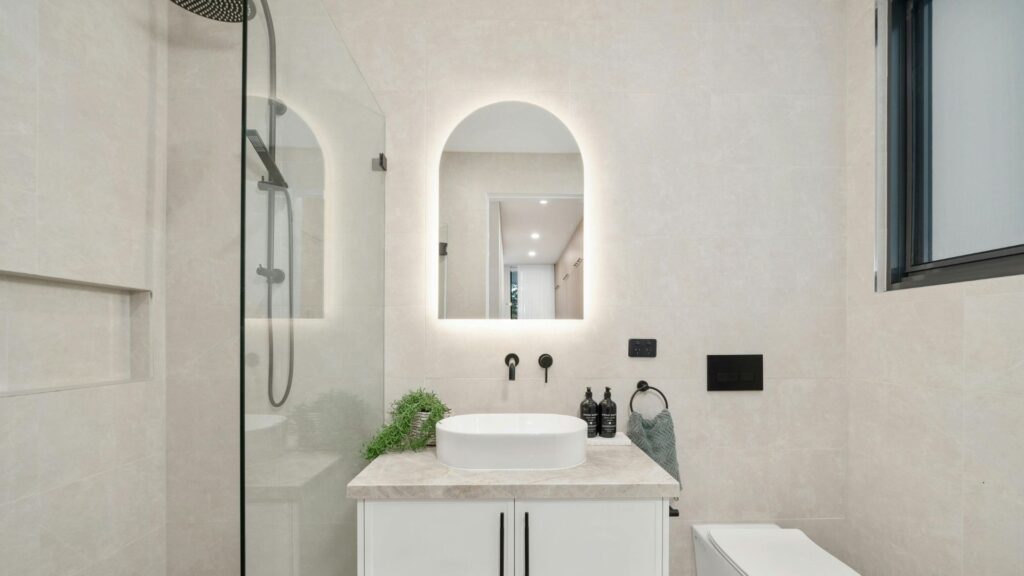
Coordinating a bathroom renovation means booking trades at the right time for the right jobs. You’ll need to decide who to call and when they are needed. The order goes like this:
- Licensed electrician rough-in, before any waterproofing
- Plumber rough-in
- Waterproofing and tiling
- Plumber fit-off
- Electrician final connection, testing, and CCEW
You need a licensed electrician for a Wollongong bathroom renovation, and you need them twice: first for the rough-in before waterproofing, then for the final connection after fit-off. Get the order wrong, and you could end up cutting into finished walls or tiles to fix electrical work that should have been completed earlier.
Planning the trades in the right order makes the renovation much easier to manage and helps avoid unnecessary delays, rework, and extra costs.
This article provides general information about NSW electrical regulations and bathroom renovation coordination. It is not legal advice. Always consult a licensed electrician and verify current NSW requirements before starting work.
Does a Bathroom Renovation in NSW Legally Require a Licensed Electrician?
Yes. Under NSW Fair Trading regulations, a licensed electrician must install all new or altered bathroom electrical circuits, including exhaust fans, lighting, heated towel rails, and in-floor heating, and issue a Certificate of Compliance for Electrical Work (CCEW).
Electrical work is specialist work under the Home Building Act 1989, and the licensing requirement applies regardless of the job value. Renovation work valued above $5,000, including GST, also requires the contractor to hold the appropriate licence for kitchen, bathroom, and laundry work. A cosmetic update like repainting or swapping a mirror will not need a sparkie. Almost every real bathroom renovation will.
For a bathroom, the CCEW is the key document. It comes from the Gas and Electricity (Consumer Safety) Act 2017 and its 2018 Regulation, and NSW Fair Trading requires you to submit a completed CCEW within seven days of completing any safety and compliance test on an electrical installation.
Since 1 March 2026, the lodgement method has changed. Building Commission NSW confirms that from that date, licensed electricians can only submit a CCEW through the BCNSW eCert portal. Paper forms, PDF submissions, and the Essential Energy portal are no longer accepted.
That gives you a question to ask at the quote stage. Ask how they lodge the CCEW. If the answer involves a paper form or a carbon copy in the post, they are describing a process that stopped being valid in March, and it is fair to wonder what else in their compliance practice is running behind.
Larger renovations may also need a Development Application or a Complying Development Certificate depending on scope. Your builder or bathroom renovator handles that side. For the wider picture of which renovation works trigger a new compliance certificate in NSW, the electrical certification stays with the electrician either way.
What is the AS/NZS 3000 Zones System, and Why does it Control what Goes Where in Your Bathroom?
AS/NZS 3000 splits a bathroom into zones based on distance from water. Each zone sets what can go in it. The closer to water, the tighter the rules.
| Zone | Where it is | What is allowed |
| Zone 0 | Inside the bath or shower base | 12V fittings rated IPX7 or better. No sockets |
| Zone 1 | Directly above the bath or shower, up to 2.25 m | Fixed fittings rated IPX4 or better, like exhaust fans. No sockets |
| Zone 2 | 600 mm beyond Zone 1, plus around basins | IPX4 or better. Enclosed lights, mirror demisters, shaver sockets |
| Beyond Zone 2 | The rest of the room | Standard fittings. Sockets need RCD protection |
IP ratings do the practical work here. The manufacturer prints the rating on the fitting, so it either qualifies for the zone or it does not. Your electrician is not making a judgement call on the day.
This is why a sparkie will knock back some fittings. A pendant your designer picked can be fine over the vanity and illegal 200 millimetres to the left.
NSW inspectors regularly find switches and sockets installed too close to wet areas. It is one of the most common compliance failures in this kind of work.
So ask your electrician to mark the zones on your layout before you order a single fitting. Fifteen minutes now, against a return trip and a restocking fee later.
What is the Correct Trade Sequence for a Bathroom Renovation in Wollongong?
The correct sequence is: (1) licensed electrician rough-in, before waterproofing; (2) plumber rough-in; (3) waterproofing and tiling; (4) plumber fit-off; (5) electrician final connection and CCEW issue. Reversing steps 1 and 3 forces you to remove tile to access the wiring.
A bathroom is not a one-trade job. Most renovations need a plumber, an electrician, and a waterproofer at minimum, usually a tiler, and a licensed builder if you are moving walls or altering the floor structure. What follows is where the electrician fits among them.
- Electrician rough-in. Cables, conduit, and mounting points go in while the walls are open, with every position set against the wet area zones.
- Plumber rough-in. Install drainage and water lines around the cable runs.
- Waterproofing and tiling. The membrane goes on. Then the tiles.
- Plumber fit-off. Connect tapware, toilet, and fixtures.
- Electrician fit-off. Connect and test the lights, exhaust fan, heat lamp, heated towel rail, and switches, then lodge the CCEW.
Step one cannot move because of the membrane. Waterproofing seals over the wall and floor surfaces, permanently locking the cable positions underneath. Moving a cable after that means cutting tiles, cutting the membrane, re-waterproofing the affected area, and re-tiling it. You have rebuilt part of the wet area to relocate one power point, and you have put the waterproofing warranty in question while you did it.
Most trade-order advice treats sequencing as a scheduling convenience. The membrane makes it a cost and compliance decision, and it’s made weeks before anyone arrives on site.
Book your electrician’s rough-in before the waterproofer. If a builder is coordinating your trades, get that booking confirmed in writing.
Which Bathroom Renovation Jobs Specifically Require an Electrician in Wollongong?
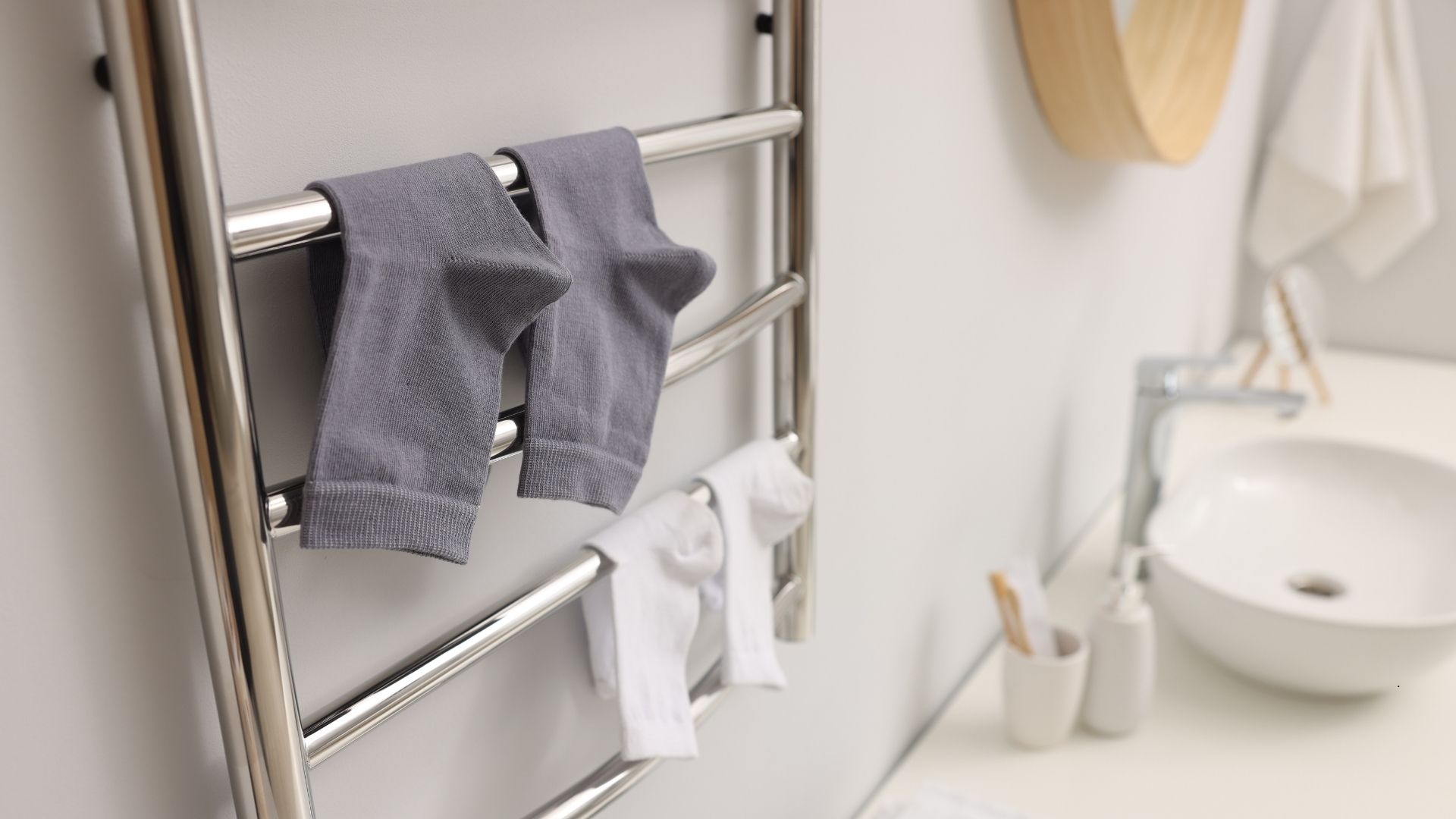
Jobs requiring a licensed electrician include new or relocated exhaust fan circuits, heat lamp installation, in-floor heating circuits, heated towel rail wiring, additional or relocated lighting circuits, shaver socket installation, and any new RCD-protected circuit. All require a CCEW.
Some of these catch people out.
Heated towel rails need their own dedicated circuit. They cannot run off an existing lighting circuit.
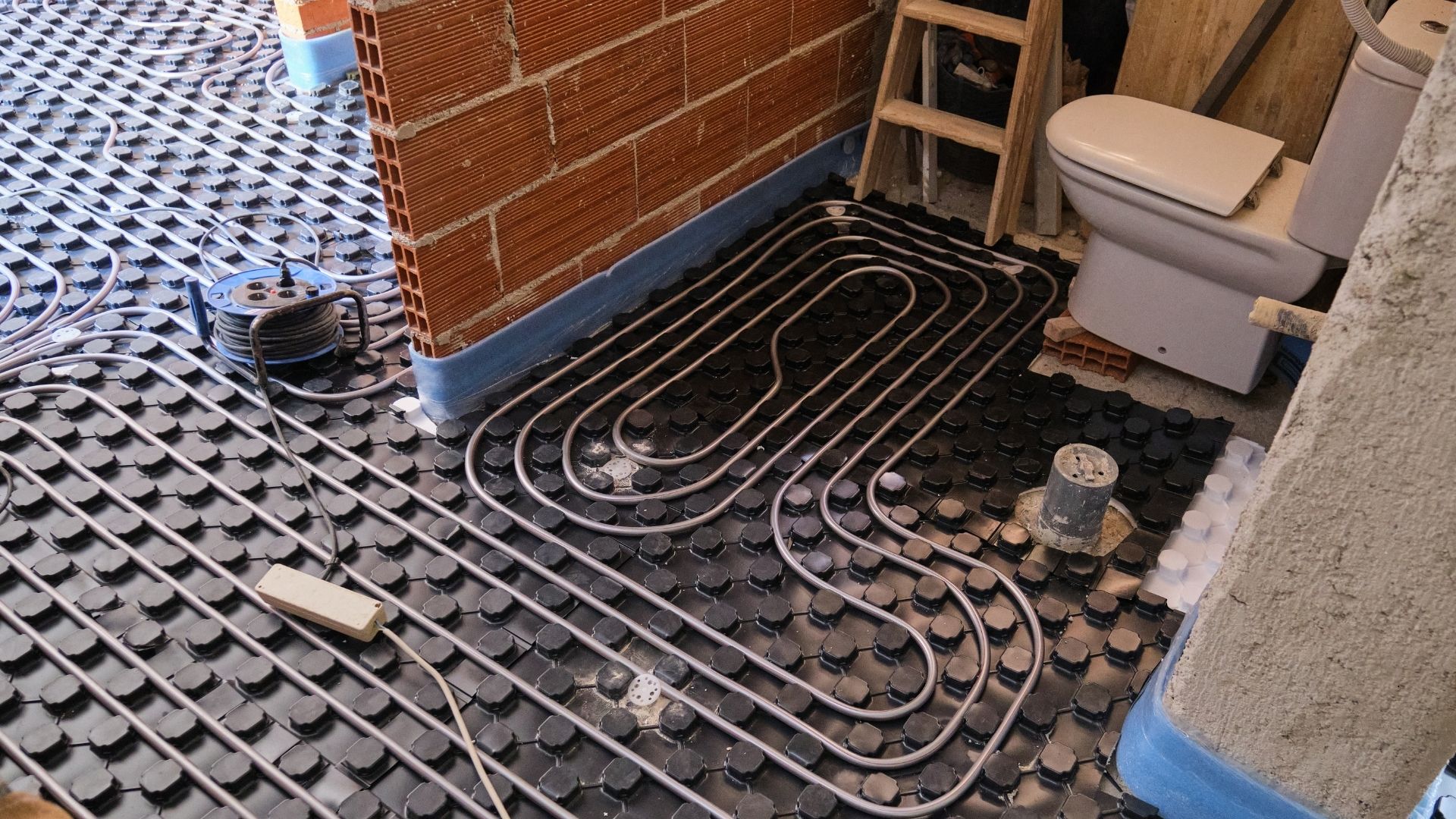
In-floor heating needs a dedicated RCD-protected circuit, and the thermostat wiring and floor sensor are licensed electrical work too.
Moving an exhaust fan is licensed work even when you keep the existing circuit. If you change the fan position or the circuit routing, you need an electrician and a CCEW.
Shaver sockets and heat lamps are small fittings governed by the same rules as everything else. Size does not exempt them.
Does a Bathroom Renovation Trigger a Switchboard Upgrade in Wollongong?
Not always. A switchboard upgrade is triggered when the renovation adds a circuit, such as a heated towel rail, in-floor heating, or a second lighting circuit, and the existing switchboard has no spare RCD-protected circuit breaker position. The electrician assesses this at the quote stage.
Two questions decide it. Does your scope add a circuit? And does the board have a free position with RCD protection to put it on? Yes to the first and no to the second means the board needs work before you can connect anything new.
Older homes across Wollongong and Illawarra are where this comes up. A board that has run a house fine for thirty years can run out of room the moment you add underfloor heating and a towel rail.
Ask for the switchboard assessment during the quote, not after demolition. It turns a possible cost into a known one while you can still adjust the scope.
What Does a Bathroom Renovation Electrician in Wollongong Typically Cost in 2026?
Bathroom electrical work is priced by scope, not by the room. A fan swap on an existing circuit is a small job. A full fit-out with underfloor heating and a new circuit is not.
| Job | Typical 2026 NSW range |
| Exhaust fan replacement, existing wiring | $150 to $350 |
| New exhaust fan with wiring | $250 to $500 |
| Exhaust fan ducted outside | $300 to $600 |
| Three-in-one heat, light and exhaust unit | $350 to $700 |
| Downlights | $80 to $150 each |
| Heated towel rail connection | $150 to $300 |
| Underfloor heating | $120 to $180 per square metre |
| Complete bathroom electrical, rough-in to certification | $1,200 to $3,500 |
These figures are approximate and based on typical 2026 NSW pricing. Your actual cost depends on site access, the condition of the existing wiring, and how much work the switchboard needs. Get a fixed-price written quote before you commit.
Ducting is the first. Running flexible ducting through the ceiling to an external discharge point adds $150 to $400, depending on the run length and how tight the roof space is.
Access is the second. Limited roof access, concrete ceilings and awkward ducting runs all take longer, and older housing stock across the Illawarra throws up more of them than a newer build will.
Switchboard work is quoted separately. So is any rewiring the electrician finds once the walls are open.
For the exact price, contact your electrician or get a free quote from us at Easther Electrical.
When Does a Bathroom Renovation Require a Level 2 ASP Electrician Rather than a Standard Licensed Electrician?
A standard bathroom renovation does not require a Level 2 ASP electrician. Level 2 involvement is triggered only if the renovation requires a new or upgraded service connection to the Endeavour Energy network, for example, upgrading from single-phase to three-phase supply to support a large in-floor heating system.
Everything inside your property boundary falls under a standard licensed electrician: new circuits, zone-compliant fittings, RCD protection, and the CCEW.
Level 2 accreditation covers the connection between the network and your home. If your bathroom scope never touches that connection, you don’t need a second contractor, and you shouldn’t be quoted for one.
Endeavour Energy is the distributor for the Illawarra, so these rules apply here. Other parts of NSW have different distributors. If your job crosses the boundary, this covers when a Level 2 ASP electrician is legally required in Wollongong.
What Should You Confirm with Your Wollongong Electrician Before Bathroom Renovation Work Starts?
Confirm these five things. Check that they have an NSW electrical contractor licence number, which you can verify on the NSW Fair Trading register. Also make sure the job fits your budget, so request a fixed-price written quote that includes the CCEW. Importantly, book the rough-in visit before waterproofing, request a zone compliance plan for every fitting, and have the switchboard assessed before finalising your scope.
- Search the electrician’s name or licence number on the NSW Fair Trading public register at fairtrading.nsw.gov.au. Do this yourself, before work starts. A photo of a licence card proves nothing.
- Get the quote in writing, with the licence number, scope, and CCEW named. NSW requires a written contract when the price is over $5,000 (including GST), and jobs between $5,000 and $20,000 need a small job contract. Below that threshold, a written quote is not compulsory, which is exactly why you should insist on one.
- Lock the rough-in date, with the waterproofer booked after it.
- Mark every light, fan, heat lamp, socket, and towel rail against its zone before ordering anything.
- Have the switchboard checked while the scope is still movable.
Always verify your electrician’s NSW contractor licence number on the NSW Fair Trading register before work begins, and make sure the job includes a Certificate of Compliance for Electrical Work.
Need help? Contact Easther Electrical. We hold an NSW electrical contractor licence and Level 2 accreditation, provide written quotes so you know what to expect to pay, and have extensive experience with bathroom renovations across Wollongong. If you have questions, call us on 02 4256 5899. We can help you coordinate the electrical requirements of your bathroom renovation.
FAQ
Do I always need an electrician for a bathroom renovation? Not for purely cosmetic work like repainting or swapping a mirror. But if your renovation involves new wiring, lighting, an exhaust fan, a heated towel rail, or power points, NSW law requires a licensed electrician.
When should I book the electrician? Before you finalise your layout, and well before the waterproofer. The rough-in has to happen while the walls are open. Once the membrane is on, the cable positions are locked.
What certificate should I receive when the work is done? A Certificate of Compliance for Electrical Work, or CCEW. Your electrician must lodge it within seven days of the safety and compliance test, and you’ll receive a copy. Keep it with your property records.
Can my builder organise the electrician for me? Yes, and many do. But a licensed electrician must carry out the electrical work. Your builder cannot do it unless they also hold an electrical licence.
Do I need a Level 2 electrician for a bathroom renovation? Almost certainly not. You only need a Level 2 electrician if the job requires a new or upgraded connection to the Endeavour Energy network, such as upgrading from single-phase to three-phase supply.
Will I need a switchboard upgrade? Only if your renovation adds a circuit and the board has no spare RCD-protected position. Ask your electrician to check at the quote stage, before the scope is locked.
How do I check my electrician is licensed? Search their name or licence number on the NSW Fair Trading public register at fairtrading.nsw.gov.au. Do it yourself before work starts.